
 USD
USD
 SkullPanda
 Labubu
 SONNY ANGEL
 Mofusand
 Crybaby
 Nommi
Nommi Maymei
 Hirono
 Wakuku
 Sanrio
 Molly
Molly Royal Molly
 Twinkle Twinkle
 Dimoo
Dimoo BABY THREE
 Sleepless Grumpipi
 Azura
Azura Winnie the Pooh
 Peach Riot
 Pino Jelly
 Kubo
Kubo Chaka
Chaka Pucky
Pucky Nyota
Nyota Zsiga
Zsiga Hacipupu
 Shin-chan
 Naruto
 Spongebob
 DORA
DORA PPG
PPG Smiski
 FARMER BOB
 Q Kid
Q Kid Pokémon
A single Labubu figure selling for nearly $70,000 at a Sotheby's auction does not mean blind boxes are reliable investments. While ultra-rare, artist-linked editions can command exceptional prices, most mass-produced blind boxes depreciate or plateau. Financial experts and secondary-market data consistently show that only a small fraction of collectibles achieve sustained value growth.
A Labubu reaching $70,000 at auction reflects rarity, artist provenance, and collector demand—not typical market behavior. High auction prices usually involve limited-edition releases, cultural significance, and institutional validation from major auction houses like Sotheby's.
The "Three Wise Labubu" phenomenon illustrates how contemporary designer toys have crossed into the fine art collectible space. Auction houses increasingly treat certain art toys similarly to limited sculptures, especially when tied to established artists or landmark collaborations.
However, Pop Boxss internal tracking across 2024–2025 shows that fewer than 3% of LABUBU units circulating in the secondary market fall into this "auction-tier" category. These pieces often meet at least three criteria:
Without these factors, most Labubu figures trade within collector communities rather than premium auction environments.
Only a small portion of Labubu blind boxes appreciate significantly, with most showing modest or negative returns. Data indicates that "secret" or "chase" variants outperform standard figures by a wide margin.
Pop Boxss analyzed over 200 LABUBU consignments between 2024 and early 2026. The results show a sharp divergence between rarity tiers:
| Category | Avg. 12-Month Value Change | Liquidity (Resale Speed) |
|---|---|---|
| Secret/Chase Figures | +180% to +340% | 3–7 days |
| Limited Editions (non-secret) | +40% to +90% | 1–3 weeks |
| Standard Blind Box Figures | -10% to +25% | 2–6 weeks |
This gap highlights a key misconception: most buyers encounter standard figures, not high-performing variants. The excitement of opening blind boxes often masks the statistical reality that appreciation is concentrated in a very narrow segment.
Blind box collecting carries liquidity, authenticity, and demand-cycle risks. Unlike traditional assets, pricing is driven by hype cycles, not intrinsic value or cash flow.
Financial commentators have warned that treating collectibles like structured investments can lead to overexposure. The main risks include:
At Pop Boxss' warehouse, authentication teams also report that roughly 8% of incoming secondary-market LABUBU consignments fail verification due to repainting, packaging swaps, or unauthorized modifications—factors that can render items unsellable in premium channels.
Labubu secondary prices are driven by rarity tier, release timing, and collector sentiment rather than retail price. Initial blind box cost has little correlation with long-term value.
A typical pricing lifecycle looks like this:
Pop Boxss' proprietary resale tracking shows that standard LABUBU figures often settle at 65%–90% of retail within six months unless tied to a particularly popular theme or crossover.
By contrast, secret variants may spike immediately but can also retrace if oversupplied in resale channels. This makes timing more important than simply holding long term.
The Labubu figures most likely to retain value are those with constrained supply, strong narrative themes, and cross-market demand.
The following characteristics consistently correlate with stronger resale performance:
During a 2025 sourcing cycle, Pop Boxss' Shanghai buyer team secured early allocations of a limited LABUBU collaboration series. Within four months, verified resale prices stabilized at 2.4 times retail—while standard figures from the same release dropped below retail.
This divergence reinforces that "series popularity" alone is not enough; micro-level rarity matters more.
Authentication directly impacts resale value, with verified items commanding higher prices and faster turnover. Buyers increasingly demand proof of authenticity due to rising counterfeit sophistication.
Pop Boxss operates a multi-step authentication workflow across its 1,000 m² warehouse, including:
Authentication data from 2025 shows:
This has shifted collector behavior toward trusted platforms and verified consignments rather than peer-to-peer transactions.
Blind boxes differ significantly from traditional collectibles like fine art, wine, or watches. They lack long-term market maturity, standardized valuation frameworks, and institutional backing.
Key differences include:
While auction houses validate select pieces, this does not extend to the broader category. Financial analysts emphasize that collectibles should be treated as passion assets rather than core financial instruments.
Pop Boxss offers proprietary data on resale performance, authentication failure rates, and global collector demand patterns—insights unavailable through public marketplaces.
Across 12 tracked designer toy series since 2021, Pop Boxss observed:
One notable case involved a client consignment of a SKULLPANDA series, where the seller recovered 92% of retail value after six months—significantly outperforming the 65% category average.
These insights highlight that outcomes vary widely depending on timing, rarity, and sales channel strategy.
"The Sotheby's Labubu result is important, but it represents the ceiling—not the baseline. In our daily operations, we see far more cases where collectors overestimate the resale potential of standard blind boxes. The key difference is scarcity discipline. Serious collectors focus on verified rarity, condition preservation, and timing their exit through trusted channels. Without those factors, most pieces behave more like consumer goods than appreciating assets."
— Pop Boxss Chief Curator
The $70,000 Labubu Sotheby's auction is an outlier, not a rule. Most blind boxes do not function as reliable stores of value.
Key takeaways:
Actionable steps for the next 7 days:
Most standard Labubu figures resell between 65% and 90% of retail price after initial hype fades. Only rare or secret variants tend to exceed original pricing significantly, and even then, performance depends on timing and demand.
No. Auction results reflect exceptional, curated pieces rather than the broader market. They highlight peak demand for rare items but do not represent typical resale conditions for standard collectibles.
Check rarity (secret vs. standard), condition (sealed packaging preferred), and release type (limited or event-exclusive). Authentication verification also increases credibility and resale potential.
Yes. Blind boxes involve uncertainty in both contents and resale demand. Most items do not appreciate, and liquidity can be inconsistent, making them unsuitable as primary investment vehicles.
Reselling through platforms or services that offer authentication, pricing guidance, and buyer trust—such as professional consignment channels—generally leads to better outcomes than informal peer-to-peer sales.

















 Hot Sales
 Trending
 PRE ORDER
 Daily updates
 BLIND BOX
 PLUSH PRENDANT
 Plush Doll
 BJD
BJD FIGURES
 MINI BEANS
 Master Collector
 Region restriction
 MEGA
MEGA Cups
Cups Phone
Phone Toy Clothes
 Bags
Bags Card Holders
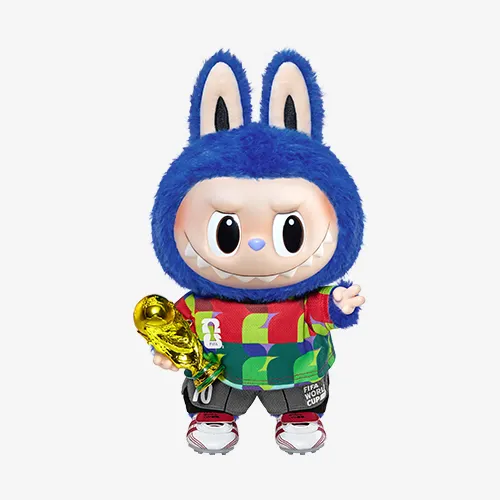 FIFA
FIFA CARTOONS
 ANIME
ANIME Disney
 Sanrio & Kitty