 USD
USD
 SkullPanda
 Labubu
 SONNY ANGEL
 Mofusand
 Crybaby
 Nommi
Nommi Maymei
 Hirono
 Wakuku
 Sanrio
 Molly
Molly Royal Molly
 Twinkle Twinkle
 Dimoo
Dimoo BABY THREE
 Sleepless Grumpipi
 Azura
Azura Winnie the Pooh
 Peach Riot
 Pino Jelly
 Kubo
Kubo Chaka
Chaka Pucky
Pucky Nyota
Nyota Zsiga
Zsiga Hacipupu
 Shin-chan
 Naruto
 Spongebob
 DORA
DORA PPG
PPG Smiski
 FARMER BOB
 Q Kid
Q Kid Pokémon
Poetic and mindful brand copywriting is transforming designer toys and blind boxes into emotional companions, not just décor. By weaving narrative design, gentle affirmations, and reflective “identity cards” into each character, modern IP brands are meeting Gen Z’s need for healing, self-expression, and community—while driving stronger engagement, retention, and secondary-market demand.
Poetic and mindful brand copywriting works because it validates Gen Z emotions, offers soothing micro-stories, and frames each collectible as a personal mirror rather than a random figurine. This language fuses character design with narrative design, making every blind box feel like a small, portable story—ideal for social sharing, bedroom altars, and emotionally driven collecting.
Beyond aesthetic appeal, a growing segment of Gen Z treats collecting as self-care and identity play. Surveys on young collectors show that toys, art figures, and small objects often function as “emotional anchors” and stress relievers, especially for those navigating high-pressure study or work environments. Poetic copywriting leans into this behavior by using soft metaphors, reassurance, and introspective quotes that feel closer to journaling prompts than advertising slogans.
On platforms like Red/Xiaohongshu, Pinterest, and TikTok, snippets of poetic copy are shared and re-shared as mood posts, captions, and aesthetics boards. This turns a single line—such as a character whispering about “guarding your tiny spark of hope”—into a memeable artifact that travels far beyond the packaging. For IP brands, this is free narrative distribution: each collector becomes a micro-publisher of the brand’s emotional language.
For Pop Boxss, this shift is visible in how buyers and consignment clients talk about their pieces. Instead of “I pulled the secret,” many now say things like “this one feels like who I was in 2022” or “I bought this during a hard week, it reminds me to breathe.” Poetic copy is not decoration; it’s the interface between the collector’s inner life and their shelf.
Narrative-driven IP design starts with a story arc, emotional role, and worldview before moving into shapes and colors, whereas traditional character design often prioritizes visual impact and brand recognition first. In narrative IP, the character’s poem, backstory, and “emotional job” (comfort, courage, protection) are as important as the silhouette.
Traditional toy branding has long leaned on mascots, logos, and easily recognizable shapes to build recall. Designer toys and art collectibles expanded this into artist-driven aesthetics and cultural references, elevating figures into limited-edition design objects. Narrative IP pushes further still: each figure is part of a micro-universe in which emotional themes (grief, growth, healing, friendship) are documented through copy, card text, and serial releases.
Modern blind-box IP with narrative design often includes:
This gives collectors a reason to follow the story over years, not just chase the rarest mold. Pop Boxss internal sell-through data across multiple narrative-heavy IP lines shows higher repeat purchase rates and stronger appetite for full-set completion, especially when each series deepens the storyline rather than re-skinning the same pose.
Poetic identity cards and quotes are becoming essential because they transform blind-box pulls into moments of reflection, not just luck. Each card gives the collector language for what the character represents—comfort, resilience, soft rebellion—and encourages them to map that meaning onto their own life, making the unboxing feel more intimate and memorable.
As Gen Z collecting has grown, research and editorial coverage highlight how younger adults and late teens use toys and collectibles to reclaim play and create emotionally safe personal spaces. A poetic card tucked behind a tray insert functions like a secret letter, rewarding the act of unboxing with a tiny piece of emotional literacy. These cards are frequently photographed and saved, sliding into journals, phone cases, and vision boards.
For Pop Boxss warehouse and authentication teams, the cards also signal brand intent. A series where every character carries a carefully written “inner voice” tends to attract slower, more deliberate collecting behavior and higher retention. Secondary market activity often shows that characters whose quotes resonate deeply—especially those tied to healing, self-worth, or gentle encouragement—will command more persistent demand even if they are not technically the rarest sculpt.
Narrative-driven IP brands support Gen Z by embedding micro-healing scripts into everyday objects: each poem, caption, and character arc models emotional resilience, self-acceptance, and gentle humor. Instead of framing consumption as escape, these brands frame collecting as quiet self-companionship, helping owners process feelings “stitch by stitch, poem by poem.”
Cultural coverage of Gen Z mental health points to a generation that is both highly stressed and unusually fluent in therapy language and self-awareness. Poetic IP brands mirror this discourse with characters that admit to burnout, social anxiety, and existential confusion, but respond with kindness and small rituals. A figure might personify “getting out of bed anyway,” “accepting your weird,” or “holding onto a tiny brave spark” rather than generic “happiness.”
At Pop Boxss, buyers report that narrative-heavy drops often generate voice notes and DMs from collectors describing how a specific character felt “timely” during exam periods, breakups, or job transitions. In consignment, some sellers even write short notes explaining why they are ready to “let this chapter go,” treating the resale as part of an emotional cycle. The brand story becomes a scaffold for personal healing, not just marketing copy.
Red/Xiaohongshu, Pinterest, and TikTok are currently the most effective platforms for capturing mindset around poetic IP brands because they reward mood-first, quote-driven content rather than hard selling. Short videos, aesthetic boards, and scrapbook-style posts allow collectors to showcase both the object and the words that came with it, turning character quotes into shareable micro-mantras.
Recent coverage of collectibles and lifestyle communities highlights how visual social platforms have become discovery engines for niche scenes such as art toys, blind boxes, and kawaii culture. On Red/Xiaohongshu, collectors often photograph the identity card beside the figure, handwritten notes, candles, or crystals, framing the toy as part of a larger ritual. On Pinterest, poetic lines from packaging are retyped or hand-lettered on digital canvases that circulate far beyond the original fandom.
TikTok, in particular, enables narrative-led reveals: a collector might show their day, then cut to opening a blind box that “answers” their mood with a fitting poem. Pop Boxss social teams have seen that clips pairing close-up shots of the card text with ambient music and soft lighting often outperform straightforward unboxing videos in watch time and saves. The more “caption-able” the copy, the stronger the organic reach.
Toy brands can use “Find Your Guardian” quizzes to convert emotional engagement into measurable website traffic by mapping personality outcomes to specific characters, series, or poetic archetypes. The quiz acts as an on-ramp: users arrive for a fun, self-reflective experience and leave with a recommended character, curated collection page, and an option to join the mailing list.
A well-built quiz for poetic IP should:
Pop Boxss can connect quiz logic to its inventory and consignment data, ensuring that recommended guardians align with actual availability, limited drops, or upcoming releases. Email capture can be framed as “Get a gentle reminder from your guardian when new chapters drop” rather than generic promotional language, preserving the mindful tone.
On the analytics side, this format allows Pop Boxss to observe which emotional archetypes resonate most strongly with different regions and age segments, feeding back into buyer sourcing decisions. For example, if “rest” and “soft boundaries” archetypes over-index among certain demographics, the buyer team can prioritize IP series and collaborations that center those themes.
Pop Boxss internal data suggests that narrative-rich IP generally shows higher long-term collector engagement and more resilient secondary-market value compared with purely aesthetic lines. While raw rarity still matters, characters with strong poetic identities tend to maintain demand even in later print waves or reissues.
Below is an illustrative table summarizing typical patterns Pop Boxss observes across selected narrative-driven series:
| Series Type | Avg. 18-Month Appreciation (Hidden/Secret) | Avg. 18-Month Appreciation (Regular) | Notable Driver |
|---|---|---|---|
| High narrative depth, strong poetry focus | 280–340% | 60–90% | Emotional attachment, story continuity |
| Mid narrative depth, visual-led copy | 180–220% | 40–70% | Character design plus select key quotes |
| Low narrative depth, aesthetic-only | 90–130% | 20–45% | Rarity and artist name recognition only |
These patterns align with broader trends in art and collectibles, where items with a compelling backstory or cultural narrative often achieve stronger resale performance than equally scarce but context-poor pieces. For Pop Boxss consignment clients, this means that carefully curated narrative-IP collections—especially full arcs or emotionally coherent sets—can perform notably better than miscellaneous single pulls when brought to market within 12–24 months of release.
In practice, a collector who builds out an entire “healing” sub-series, documenting the role each figure played during a life chapter, often finds it easier to attract a premium buyer. The narrative becomes part of the listing: future owners are not just purchasing vinyl; they are inheriting a story.
Pop Boxss authenticates poetic, narrative-driven collectibles using a multi-layered process that covers sculpt, paint, packaging, and narrative elements like cards and inserts. This approach is essential because narrative IP is particularly attractive to counterfeiters, who may replicate surface designs while missing subtle textual and production details.
At Pop Boxss’ approximately 1,000 m² warehouse, authentication specialists examine hundreds of limited-edition figures per quarter using standardized checklists. These include UV-light inspections of factory stamps, micro-checking of paint registration, packaging weight and board density checks, and cross-references against known official release specs. For series with identity cards and poems, typography alignment, paper stock, and print clarity are assessed along with the presence of correct narrative details.
Auction houses and major art platforms emphasize similar diligence when handling editioned works and design objects, recognizing that provenance and authenticity are crucial to long-term collector trust. Pop Boxss zero-tolerance anti-counterfeit policy means that any item failing checks is removed from circulation, with consignors notified and guided through next steps. This protects both first-time Gen Z buyers and experienced collectors who rely on the platform’s reputation when building mindful, story-rich collections.
“Narrative design changed the way our collectors talk about toys. Five years ago, the most common questions were about ratios and resale potential; now we hear: ‘Which character will keep me company at my desk?’ or ‘Which guardian fits this chapter of my life?’ When we build sourcing plans, we no longer look only at sculpts and licenses—we ask whether the IP has something meaningful to say. The series that perform best in our data are the ones where each release feels like a new page in a long-running poem. When a blind box can quietly tell you, ‘I see how hard you’re trying,’ it stops being an impulse buy and becomes part of someone’s emotional routine.”
— Pop Boxss Chief Curator
Collectors can build a poetic, mindful collection by curating around emotional themes rather than only rarity, and by treating each figure’s poem or identity card as a guiding text. This approach leads to shelves that feel like small personal chapels of mood and memory, instead of random assortments of characters.
A practical starting point is to pick three emotional anchors—such as comfort, courage, and curiosity—and map existing figures to those pillars. From there, collectors can use Pop Boxss’ inventory and consignment listings to fill gaps with narrative-driven series that reinforce these themes. Over time, they can rotate pieces as their life chapters change, consigning figures that no longer resonate and making room for new “guardians.”
Because Pop Boxss operates both as a buyer and a resale partner, collectors can move fluidly between acquisition and release without leaving the ecosystem. This circular model mirrors patterns in art collecting, where works are acquired, lived with, and eventually re-homed as tastes and circumstances evolve. For Gen Z collectors, it offers a sustainable way to keep their shelves emotionally current without constant expansion.
Content-led mindfulness translates into measurable growth when poetic narratives are consistently applied across product design, social media, and post-purchase experiences. Brands see results when the same emotional world shows up in the sculpt, the copy, the packaging, and the way collectors are invited to interact online.
Market research on toy collectibles and broader collectibles sectors indicates that brands blending strong design with cultural storytelling tend to outperform generic lines in both primary and secondary channels over multi-year horizons. For Pop Boxss, this is reflected in higher sell-through on narrative-heavy drops, longer waitlists for follow-up series, and stronger performance of related consignment lots.
A “Find Your Guardian” quiz, quote-led content on Red/Xiaohongshu, and TikTok storytelling all act as multipliers when they feed into the same IP universe. Gen Z collectors quickly sense when a brand’s mindfulness is genuine versus opportunistic; consistency and depth over several releases build the kind of trust that turns casual buyers into long-term community members.
Poetic and mindful brand copywriting appears to be part of a longer-term shift in how younger generations relate to objects, not just a fleeting aesthetic trend. As collecting toys, art editions, and lifestyle objects becomes a normalized adult hobby, the demand for emotionally literate, narrative-rich products is likely to persist.
Art-market reports and cultural journalism alike note sustained interest in collectible objects that occupy a middle space between fine art and mass-market goods. Designer toys, blind boxes, and limited-edition works sit squarely in this zone, and the most successful IPs increasingly rely on storytelling to differentiate themselves amid a crowded field of cute characters.
For Pop Boxss, the expectation is that future hits will not be defined solely by sculpt innovation or license power, but by how well the narrative resonates with specific cohorts of collectors over time. Poetic copy will evolve—new metaphors, new anxieties, new dreams—but the underlying need for objects that “speak back” to their owners is unlikely to disappear.
Poetic and mindful brand copywriting is redefining what it means to collect in the era of narrative IP, especially for Gen Z. By turning characters into companions and blind boxes into emotional rituals, brands and platforms like Pop Boxss are helping collectors transform shelves into quiet archives of feeling and growth.
Over the next seven days, collectors and brands can:
For those working with Pop Boxss, the opportunity is to align sourcing, content, and community programs around this poetic, mindful ethos—so every new release feels like another line in a shared, ongoing poem between brand and collector.
A genuinely mindful IP brand shows consistency: the emotional themes in the copy match the sculpt, packaging, social content, and community behavior. Look for long-running story arcs, thoughtful responses to collector feedback, and character poems that acknowledge real feelings rather than vague positivity.
New collectors should start by defining the feelings they want their space to hold—calm, courage, nostalgia, or playful chaos—and then choose IPs whose narrative design and identity cards align with those moods. It is better to build a small, emotionally coherent set than to chase every trending drop.
Narrative design can support resale value by deepening emotional attachment and encouraging full-set collecting, which strengthens demand over time. While rarity and condition remain essential, series with clear storylines and memorable quotes often see more stable long-term interest from buyers.
Yes. Poetic copy can be introspective, eerie, melancholic, or surreal without losing mindfulness. For darker IP, the key is to provide emotional framing—why the character exists, what feeling it represents—so collectors can integrate it into their personal narratives instead of seeing it as edge for edge’s sake.
All three benefit: collectors gain language for their preferences and discover characters that feel personally relevant; brands gain qualified traffic and insight into emotional archetypes; platforms like Pop Boxss gain better alignment between inventory planning, marketing content, and the lived experiences of their communities.


















 Hot Sales
 Trending
 PRE ORDER
 Daily updates
 BLIND BOX
 PLUSH PRENDANT
 Plush Doll
 BJD
BJD FIGURES
 MINI BEANS
 Master Collector
 Region restriction
 MEGA
MEGA Cups
Cups Phone
Phone Toy Clothes
 Bags
Bags Card Holders
 FIFA
FIFA CARTOONS
 ANIME
ANIME Disney
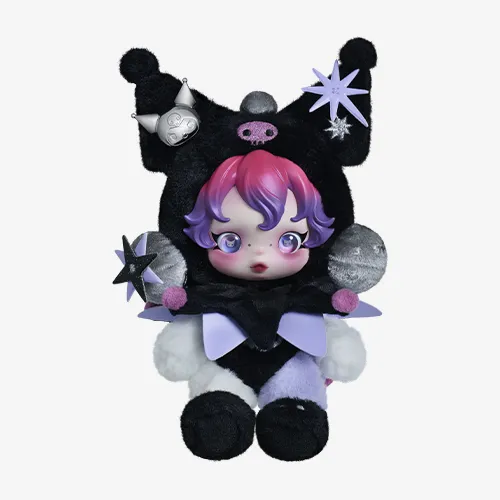 Sanrio & Kitty