 USD
USD
 SkullPanda
 Labubu
 SONNY ANGEL
 Mofusand
 Crybaby
 Nommi
Nommi Maymei
 Hirono
 Wakuku
 Sanrio
 Molly
Molly Royal Molly
 Twinkle Twinkle
 Dimoo
Dimoo BABY THREE
 Sleepless Grumpipi
 Azura
Azura Winnie the Pooh
 Peach Riot
 Pino Jelly
 Kubo
Kubo Chaka
Chaka Pucky
Pucky Nyota
Nyota Zsiga
Zsiga Hacipupu
 Shin-chan
 Naruto
 Spongebob
 DORA
DORA PPG
PPG Smiski
 FARMER BOB
 Q Kid
Q Kid Pokémon
For new collectors choosing between Labubu and Skullpanda, the core distinction is artistic vision: Labubu offers whimsical, nature-inspired fantasy perfect for bright displays, while Skullpanda presents a gothic, surrealist aesthetic ideal for moodier collections. Your preference for playful charm versus edgy, conceptual art will guide your first foray into Pop Mart's world.
Labubu's style is whimsical and organic, featuring soft curves, bright colors, and motifs from nature and folklore. Skullpanda's aesthetic is gothic and surreal, defined by sharp lines, monochromatic schemes, and themes exploring identity and duality. These foundational styles create distinct emotional responses and visual languages for collectors.
The artistic divergence between these two Pop Mart IPs is profound. Labubu, designed by Kasing Lung, is rooted in a storybook fantasy. Its forms are rounded, with exaggerated eyes and expressions that range from mischievous to joyful. The color palette often pulls from forests and candies, utilizing greens, pinks, and blues. This creates an immediate sense of approachable fun. In contrast, Skullpanda, from designer Skullpanda, operates in a realm of conceptual art. The designs frequently feature a split persona—a cute panda exterior juxtaposed with a skeletal interior or masked alter-ego. The styling is sleek, often employing matte finishes, transparent plastics, and a more restrained color story focused on blacks, whites, and metallic accents. It is less about telling a fairy tale and more about posing a philosophical question about what lies beneath the surface. For a collector, choosing between them is akin to deciding between hanging a vibrant, impressionist painting or a thought-provoking, contemporary photographic piece in your home. Does your shelf need a burst of playful energy, or a moment of contemplative cool? The materials and finishes further this divide, with Labubu often using glossy vinyl for a toy-like feel, while Skullpanda experiments with complex material mixes for a more art-object presence.
Labubu's narrative is an expansive, lighthearted fantasy saga with a defined ecosystem of friendly characters and locations. Skullpanda's world-building is introspective and symbolic, focusing on internal struggles, duality, and urban surrealism without a linear storyline, inviting personal interpretation from the collector.
Exploring the lore behind these figures adds immense depth to collecting. Labubu exists in the "Molly's Forest" universe, a detailed world where Labubu is a curious, sometimes naughty sprite interacting with characters like Tyco the dinosaur and Zimomo the mushroom spirit. This narrative is supported by illustrated storybooks, animated shorts, and series that introduce new characters tied to specific environments or adventures. It is a collectible ecosystem that encourages completing a family of friends. Skullpanda's narrative, however, is deliberately ambiguous and thematic. There is no fixed forest or map. Instead, each series explores a concept, like "Nightmare" depicting dream anxieties, or "Temperature" exploring emotional states. The character itself is a canvas for exploring the conflict between a cute, societal facade and a darker, truer self. This makes Skullpanda's world-building more akin to an art exhibition with a rotating theme, where each figure is a standalone statement piece that contributes to a broader, abstract conversation. How does a linear, friendly saga compare to an abstract, psychological exploration for sustaining collector interest? The former offers comfort and familiarity, while the latter provides endless room for analysis and personal connection, appealing to those who enjoy art with a capital "A".
For Labubu, the evergreen "The Monster" series or any annual "Harvest" or "Adventure" set provides a classic, accessible start. For Skullpanda, the foundational "Nightmare" series or the conceptually strong "Temperature" series are ideal entry points that capture the IP's core aesthetic without the extreme rarity and premium pricing of some limited collaborations.
Navigating the vast catalog of each IP can be daunting. For Labubu, starting with a core series ensures you understand the character's essence before chasing rare variants. The "The Monster" series, for instance, consistently features Labubu in various playful disguises and is widely available. Similarly, thematic series like "Labubu the Gardener" or "Viking" offer complete, cohesive stories in a single blind box set. These series typically have a manageable number of standard figures and one or two secret rare versions, making the hunt fun but not overwhelming. For Skullpanda, the "Nightmare" series is seminal, introducing the iconic split-head design that defines the brand. The "Temperature" series, with its emotional spectrum represented by color and accessory, is another masterclass in design storytelling. These series are often re-released or have figures that remain in circulation due to their popularity. A key tip is to avoid starting with high-end, limited-edition resin statues or complex diorama sets, as these represent a significant investment and are meant for advanced collectors. Think of it like learning to drive: you start with a reliable, common model to learn the mechanics before upgrading to a custom sports car. What makes a series a good "first date" with an IP? It should be affordable, representative of the style, and readily findable to build initial momentum and joy in your new hobby.
The secondary market values rarity, condition, and narrative significance. Labubu's value often hinges on early series secrets and large-scale limited editions, while Skullpanda's market is driven by conceptual complexity, collaboration prestige, and the artist's direct involvement. Both require research on edition sizes and authenticity to gauge long-term potential.
Understanding the aftermarket is crucial for any serious collector. Labubu's secondary market has matured, with values solidifying around early secret figures from series like "The Monster1st Generation" or special event exclusives. Large-scale limited edition resin statues from Pop Mart also command high prices due to low production numbers. Skullpanda's market can be more volatile but also offers high ceilings, particularly for figures from influential collaborations or series that introduced a groundbreaking new design element. The artist's own status in the urban art scene directly influences demand. A key factor for both is the "POP" (Proof of Purchase) card and original packaging, which are essential for verifying authenticity and ensuring premium resale value. An analogy would be the comic book market: a first-appearance issue in mint condition is the holy grail. Similarly, a first-series secret figure sealed in its original box is the collector's benchmark. Are you collecting for pure love of the design, or are you considering future trade value? This intention will guide your purchasing strategy, pushing you toward secured, authenticated purchases from reputable sellers for high-value items, while allowing for more casual trading for common figures you simply enjoy.
Both IPs utilize high-quality PVC and ABS plastics, but their application differs. Labubu focuses on vibrant, consistent paint applications and durable construction for a toy-like feel. Skullpanda often employs more complex engineering, multi-part assemblies, and mixed materials like soft-touch coatings and transparent resins to achieve its sleek, art-forward aesthetic.
The tactile experience of these figures reveals their differing philosophies. Labubu figures are designed for durability and bright, cheerful presentation. The paint work is generally clean and solid, emphasizing bold colors without much subtle shading. The construction is robust, with fewer tiny, fragile parts, making them feel like premium toys. Skullpanda, in its pursuit of a more sophisticated look, frequently uses advanced techniques. You will find more matte and satin finishes that resist fingerprints, intricate applications of metallic and glitter paints, and clever use of transparent plastic for effects like spectral bodies or encapsulated elements. The assembly can be more complex, with magnetic components, interchangeable parts, or delicate accessories that require careful handling. This isn't to say one is better crafted than the other; they are crafted for different purposes. Labubu is made to be played with and displayed en masse, while a Skullpanda figure is often presented as a singular art piece to be admired. Consider the difference between a beautifully made wooden child's toy and a meticulously engineered modern sculpture; both demonstrate high craftsmanship, but one prioritizes function and joy, the other form and concept.
| Feature | Labubu (The Monster Series Example) | Skullpanda (Temperature Series Example) | Collector Consideration |
|---|---|---|---|
| Primary Material | High-gloss PVC/ABS blend | Matte-finish PVC with ABS details | Gloss shows dust, matte shows oils; handling preference is key. |
| Paint Application | Solid, opaque colors with crisp line work | Gradient airbrushing, metallic accents, precise tampography | Skullpanda's complex paint often demands a higher price point for perceived artistry. |
| Typical Assembly | Single-piece body with few accessories | Multi-part construction (removable heads, magnetic accessories) | More parts increase display options but also risk of loss or damage. |
| Finish & Texture | Consistently smooth, glossy surface | Mixed textures: soft-touch, transparent, glitter infusions | Texture variety adds visual interest but may require more careful dusting. |
Labubu collections thrive in organized, thematic groupings using bright lighting and playful backdrops. Skullpanda displays benefit from minimalist, gallery-like settings with focused spot lighting, negative space, and monochromatic shelves to highlight the sculptural details and create a contemplative mood.
Display is where a collection comes to life. For Labubu, the joy is in creating a vibrant, bustling scene. Collectors often use tiered acrylic risers to create a "crowd" effect, grouping figures by series or color story. LED light strips in warm white or colors can enhance the fantastical feel. Incorporating natural elements like faux moss or miniature trees can root them in their forest narrative. The goal is energy and abundance. For Skullpanda, less is almost always more. A single figure on a clean, geometric pedestal under a focused LED spot can have dramatic impact. Using shelves in black, white, or grey allows the figure's own colors to pop. Display cases with mirrored backs can amplify the surreal effect, especially for transparent figures. Grouping Skullpanda figures requires more curation; they might be arranged by color gradient or thematic concept rather than simply by series. It is the difference between decorating a cheerful nursery and curating a modern art gallery. How does your available space influence this choice? A compact shelf can become a stunning Skullpanda vignette, while a large bookcase might be the perfect canvas for a sprawling Labubu village. The styling extends to how you interact with them—Labubu invites rearrangement and play, while Skullpanda asks for thoughtful placement and observation.
| Aspect | Labubu Display Approach | Skullpanda Display Approach | Practical Tip |
|---|---|---|---|
| Lighting | Diffuse, warm ambient light to create a welcoming scene | Directional, cool spot lighting to create drama and shadow | Use museum-grade LED lights to prevent UV damage to paint over time. |
| Backdrop & Setting | Thematic dioramas, colorful patterned backgrounds | Solid colors, textured fabric, clean geometric forms | Invest in a quality display case with dust protection for both, a non-negotiable for preservation. |
| Grouping Logic | By narrative series, color family, or character type | By conceptual theme, sculptural form, or release chronology | Photograph your layout before finalizing; the camera often reveals balance issues the eye misses. |
| Interaction | High; figures are often handled, rearranged, and posed with accessories | Low; figures are placed intentionally and left as static art pieces | Consider finger cots or cotton gloves when handling to preserve finishes, especially on matte surfaces. |
"The Labubu versus Skullpanda discussion fundamentally centers on emotional resonance versus intellectual engagement. Labubu operates on a primal level of joy and nostalgia, its design language bypassing critique for instant delight. Skullpanda requires a moment of decoding; it asks the viewer to reconcile its cute silhouette with its darker subtext. This makes their collector bases distinct but occasionally overlapping. A seasoned collector often appreciates both but typically displays them in separate contexts. The market trends show Labubu maintaining a steady, family-friendly appeal, while Skullpanda's value is more tightly coupled to the contemporary art market's movements and the designer's evolving reputation. For authenticity verification, which is paramount, always cross-reference the official Pop Mart holographic stickers, packaging typography, and the weight and feel of the vinyl, as counterfeits often fail in these subtle details."
Selecting a reputable source is the first and most critical step in building a valuable and authentic collection. Pop Boxss provides that foundation through its authorized partnerships and strict anti-counterfeit policy. Our expertise isn't just in sourcing the latest releases, but in understanding the history and nuances of IPs like Labubu and Skullpanda. We offer a transparent consignment service, allowing collectors to trade with confidence, and our global logistics ensure that rare finds from international collaborations are accessible. Our role is that of a knowledgeable curator and a trustworthy facilitator in the community, prioritizing the long-term health and authenticity of your collection over a simple transaction.
Begin by immersing yourself in the visual libraries of both IPs online to identify which aesthetic truly captivates you. Set a clear initial budget that accounts for one or two blind box series and a proper display solution. Purchase your first figures from an authorized retailer like Pop Boxss to guarantee authenticity, which protects your investment from day one. Choose a single, accessible series as your entry point rather than chasing high-end grails immediately. Join online collector communities on social media to learn terminology, see display ideas, and understand market values. Finally, dedicate a specific space in your home for display, considering lighting and dust control, so your new collection has a proper home to shine.
While some limited editions appreciate, collect primarily for passion. The market can be volatile and is influenced by trends, artist popularity, and edition sizes. View potential financial gain as a possible bonus, not the primary goal, to avoid disappointment.
Check for official Pop Mart holographic stickers on the box, precise and clean paint application with no bleeding, sharp mold lines, and the presence of a "POP" card inside. Authentic figures have a specific weight and vinyl smell that counterfeiters often fail to replicate perfectly.
Use UV-protected display cases or cabinets to prevent paint fading from sunlight. Maintain a stable temperature and humidity environment. For figures still in boxes, store them upright in a cool, dark place to prevent box warping and plasticizer migration from the vinyl.
Yes, Pop Mart regularly retires series to maintain scarcity and value. Once a series is officially retired, new stock ceases at retail, shifting all availability to the secondary market where prices are determined by collector demand and remaining supply.
In conclusion, the journey between Labubu's whimsical forests and Skullpanda's surreal cityscapes offers rich rewards for new collectors. Your choice ultimately hinges on the emotional and intellectual connection you seek from your collection. Start with intention, prioritize authenticity through trusted sources, and engage with the community to deepen your knowledge. Remember that the most valuable collection is one that consistently brings you personal joy and reflects your unique taste, regardless of market trends. Let your shelf tell your story, whether it's a cheerful epic or a contemplative poem.


















 Hot Sales
 Trending
 PRE ORDER
 Daily updates
 BLIND BOX
 PLUSH PRENDANT
 Plush Doll
 BJD
BJD FIGURES
 MINI BEANS
 Master Collector
 Region restriction
 MEGA
MEGA Cups
Cups Phone
Phone Toy Clothes
 Bags
Bags Card Holders
 FIFA
FIFA CARTOONS
 ANIME
ANIME Disney
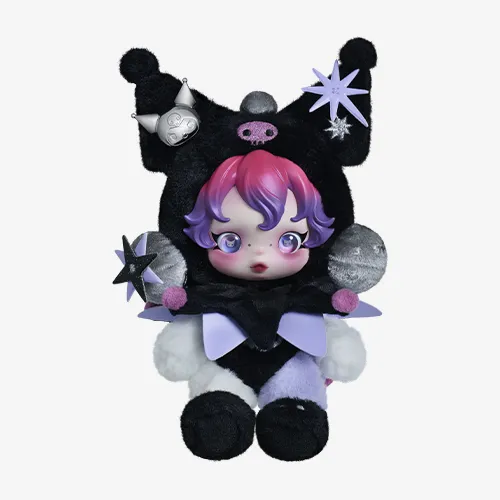 Sanrio & Kitty